Using GLP-1 Medications? Lose the Fat, Not the Muscle.
By Charles Lockard, ISSA Master Trainer and owner of The Fit Body Coach in Abilene, Texas
If the scale is going down, here’s another question worth asking. What can you do today that you couldn’t do a month ago? Maybe you can stand up from a low chair more easily, carry your groceries in one trip, or take the stairs with more confidence. Those are changes worth training for while you’re losing weight.
Don’t just become lighter. Become stronger, healthier and more physically capable.
What happens to muscle during weight loss?
Semaglutide (Ozempic and Wegovy) acts on the GLP-1 receptor. Tirzepatide (Mounjaro and Zepbound) acts on both GIP and GLP-1 receptors. The brands have different approved uses. Talk with your prescriber about your medication.
When you lose weight, some of what comes off can be lean tissue as well as fat. In the SURMOUNT-1 body composition substudy, about three quarters of the weight lost on tirzepatide was fat mass and one quarter was lean mass. The proportions were similar in the placebo group. A DXA scan counts water and other tissue as lean mass, so it cannot tell us exactly how much muscle someone lost or how strong they are.
Can strength training make a difference during weight loss?
In a 40-week randomized trial, 120 adults ages 50–70 taking tirzepatide were assigned to three supervised resistance sessions per week or their usual activities. The groups lost similar amounts of fat. The training group lost about 2.4 pounds less DXA-measured lean soft tissue and got stronger on upper- and lower-body tests. Strength declined in the usual-activity group. Both groups lost some lean tissue. The trial took place at one site and excluded people with diabetes or cardiovascular disease. Results may differ for someone taking semaglutide. https://www.nature.com/articles/s41591-026-04752-5
An earlier trial in adults 65 and older found that resistance training during diet-induced weight loss improved strength and limited lean-mass loss compared with aerobic training alone. It did not involve GLP-1 medication. https://www.nejm.org/doi/full/10.1056/NEJMoa1616338
I focus on keeping the muscle you have and building strength you can use. Some people can build muscle while losing fat, particularly when they’re new or returning to training and eating and recovering well. A controlled study demonstrated that possibility in young men under intensive training and dietary conditions. It did not involve GLP-1 medication or older adults. https://pubmed.ncbi.nlm.nih.gov/26817506/
Body composition and everyday strength after 45
Weight loss tells you what happened to total weight. Body recomposition describes changes in fat and lean tissue. Two people can lose the same number of pounds and see different changes in shape or definition. I track what you can do as well as what you weigh: how you move, what you can lift and whether daily tasks feel easier.
Strength and muscle can decline as we age. Losing lean tissue can add to that concern, particularly if standing from a chair, climbing stairs or carrying things is already difficult. Sarcopenia is a clinical condition involving low muscle strength and reduced muscle quantity or quality. A lower lean-mass reading by itself isn’t a diagnosis. https://doi.org/10.1093/ageing/afy169
Working muscles use glucose. A small controlled study found improved insulin-mediated glucose uptake in trained muscles. Muscle also uses energy at rest, but the effect of gaining a modest amount on resting calorie burn is modest. I want you to get stronger because it helps you stay capable. https://pubmed.ncbi.nlm.nih.gov/14747278/ and https://pubmed.ncbi.nlm.nih.gov/20962155/
Start building strength during weight loss
If your clinician says training is appropriate, start with movements you can do comfortably and progress as you adapt. That might mean getting up from a chair, a supported step-up, or learning to push and pull with a manageable resistance. I often start with two manageable sessions a week, then adjust based on your ability and recovery.
Protein matters, and so do enough total food, nutrient-dense foods, fluids, sleep and time to recover. Medication can make eating enough harder. Your prescriber or a registered dietitian can help set protein and fluid targets for your needs. If nausea or other symptoms make eating or drinking difficult, tell your care team. The multi-society nutrition advisory covers nutrition, hydration and resistance exercise during treatment: https://doi.org/10.1016/j.obpill.2025.100181
I’m Charles, the only trainer at The Fit Body Coach. I’ve trained people one-on-one for about 30 years. I work primarily with adults over 45 in a quiet, private studio in Abilene. It’s just you and me. I start with how you move, what you want to do and any limits your healthcare team has given you. I provide personal training. Your medical care, medication and nutrition therapy belong with your healthcare team.
See my private studio: https://thefitbodycoach.com/
Request a consultation: https://thefitbodycoach.com/contact
Frequently asked questions
Can I lift weights while taking Ozempic or another GLP-1 medication?
Many people can. Ask your healthcare team what is appropriate for you, especially if you have symptoms, take other glucose-lowering medications, or are resuming exercise after illness or surgery. I can adapt training within their guidance.
Do I have to lift heavy to start?
No. I start with a resistance and range of motion you can control and increase the challenge gradually. You don’t need to be in shape before coming in.
Can strength training replace my medication?
No. Resistance training complements medically supervised weight loss. Decisions about starting, changing or stopping medication belong with your prescriber.
Will I gain muscle while losing weight?
You might, but it isn’t assured. Keeping more lean tissue and getting stronger are worthwhile results even when you’re not adding muscle mass.
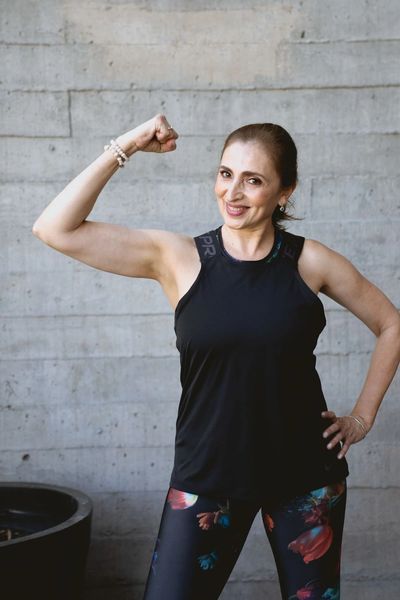
Photography is illustrative. The people and settings shown are stock subjects and locations. They do not depict Charles, his clients, his studio or medication use, or imply endorsement.
Strength training in practice